Not a solitary feeling
Fiona Connor
Colin McCahon
Ross Hemera
Brett Graham
Mark Harvey
Ayesha Green
Yuki Kihara
Kate Newby
Layla Rudneva-Mackay
Christine Hellyar
Tanya Ashken
Melissa Macleod
Curated by Susan Ballard and Sophie Thorn
03 July – 11 October 2026
Not a solitary feeling is a group exhibition bringing perspectives from the environmental humanities to Ngā Puhipuhi o Te Herenga Waka—Victoria University of Wellington Art Collection. Including a selection of loaned and collection works, the exhibition draws attention to perceived boundaries between human and more-than-human, planet and atmosphere. These works may prompt us to think about things which are amorphous and immediate—wind, weather, water, and the air in-between. To think about bodies which we might not always be able to see but can sense and feel, and beings which swoop suspended in space. Not a solitary feeling pays attention to the atmosphere as a commons and invites us to consider what it means to become kin, to be a community of which this planet is a part. To be filled with energy. Together these works reframe the past, allow us to hold the world before us in the present, and propose radical alterations to how we might think, anticipate, and imagine our future.
Not a solitary feeling completes a curatorial collaboration between Professor of Art History and Environmental Humanities, Susan Ballard, and former Kaiwhakarākei, Curator Collections, Sophie Thorn. Conceived as chapters in an ever-evolving conversation which began with Listening Stones Jumping Rocks in 2021 and Folded Memory in 2023, this exhibition series unpacks the possibilities for an environmentally-considered art history of Aotearoa.
This exhibition is supported by a sustainability grant from Te Parahia Contestable Fund at Te Herenga Waka.
Fiona Connor is an Aotearoa-born Los Angeles-based multidisciplinary artist. Her practice spans installation, sculpture and drawing, and typically involves the repurposing of objects or structures drawn from existing architectural spaces. By incorporating these materials into site-specific works, Connor interrogates the relationship between location and representation, questioning how specific environments can influence our perception of objects. She completed a Bachelor of Fine Arts in 2004 at Elam School of Fine Arts, University of Auckland Waipapa Taumata Rau and a Master of Fine Arts in 2011 at the California Institute of the Arts, Los Angeles. Connor received the Chartwell Trust Award for Patronage in 2011 and was shortlisted for the Walters Prize in 2010. She has held residencies at Monash University, Dunedin Public Art Gallery and ISTA, Maria Gugging. Selected exhibitions include I haven't arrived yet, Closed Down Clubs, Maureen Paley, London (2026); Blanket Games, Coastal Signs, Tāmaki Makaurau Auckland (2026), Drawing something under itself, Kunstverein Düsseldorf (2023); Long Distance, Maureen Paley, London (2022); and Closed Down Clubs, MAK Center for Art and Architecture, Los Angeles (2018).
Colin McCahon (1919-1987) is a prolific and extraordinarily influential artist who spent much of his career in Tāmaki Makaurau Auckland. His body of work traverses a wide array of themes, including religion and biblical literature, faith and doubt, the threat of nuclear warfare, the quest for a cultural identity independent from Aotearoa New Zealand’s colonial past, and environmental concerns closely linked with this country’s landscape. McCahon studied art at King Edward Technical College, Ōtepoti Dunedin from 1937–1939. He had his first exhibition with the Otago Art Society in 1939 and exhibited regularly with The Group, a collective of influential modernist painters, throughout his life. He travelled to Melbourne in 1951 under the sponsorship of Charles Brasch and to the United States in 1958 with support from the Carnegie Trust and Auckland City Council. McCahon held positions as the Keeper and Deputy Director of Auckland City Art Gallery, and as Lecturer in Painting at Elam School of Fine Arts, University of Auckland Waipapa Taumata Rau. Selected exhibitions include A Land of Granite: McCahon and Otago, Dunedin Public Art Gallery (2020); A Place to Paint: Colin McCahon in Auckland, Auckland Art Gallery Toi o Tāmaki (2019); On Going Out with the Tide, City Gallery Wellington Te Whare Toi (2017); From the Sun Deck: McCahon's Titirangi, Christchurch Art Gallery Te Puna o Waiwhetū (2016); Colin McCahon, National Gallery of Australia, Canberra (2007); A Question of Faith, Stedelijk Museum, Amsterdam (2002); The Promised Land, National Gallery of Australia, Canberra (1990); and Colin McCahon: Gates and Journeys, Auckland City Art Gallery (1988). McCahon died in Tāmaki Makaurau Auckland in 1987.
Ross Hemera (Ngāi Tahu, Ngāti Māmoe, Waitaha) is a multidisciplinary artist and designer based in Tauranga Moana. Known for his largescale mixed-media sculptures and installations, Hemera translates the artistic traditions of his tīpuna into contemporary Māori art and design. His works comment on the relationship between land, people and culture, offering new interpretations on some of the oldest surviving forms of toi Māori. In particular, the rock art of Ngāti Māmoe and Waitaha tāngata of Te Waipounamu has been a longstanding creative influence on Hemera’s work. Hemera is a founding member of the Ngāi Tahu artist collective Paemanu. He is currently the Pou Tokomanawa of the Paemanu Charitable Trust: Ngāi Tahu Contemporary Visual Art. He has received numerous major public commissions throughout his career, including Pūtoi o te Kāhu at Te Rua Mahara o te Kāwanatanga Archives New Zealand, Ōtautahi Christchurch (2018), Tuhituhi Whenua at Te Hononga Christchurch Civic Building (2010) and Whakamarama at the Museum of New Zealand Te Papa Tongarewa, Te Whanganui-a-Tara Wellington (1998). Selected exhibitions include Huikaau: where currents meet, Dunedin Public Art Gallery (2023); He Manawa Whenua: He Puna Wai – Water \ Way, Aratoi Wairarapa Museum of Art and History, Whakaoriori Masterton (2019); and Te Puāwai o Ngāi Tahu, Christchurch Art Gallery Te Puna o Waiwhetū (2003).
Brett Graham (Ngāti Koroki Kahukura, Tainui) is a sculptor based in Tāmaki Makaurau Auckland. He engages with a wide range of materials and forms, including large-scale sculptures and installations. Graham’s practice blends traditional craft with contemporary themes to explore issues of imperialism with reference to his own Māori whakapapa and to cross-cultural Indigenous experiences of the colonial process. He completed a Bachelor of Fine Arts in 1988 at Elam School of Fine Arts, University of Auckland Waipapa Taumata Rau, a Master of Fine Arts in 1990 at the University of Hawai’i, Honolulu and a Doctor of Fine Arts in 2003, also at Elam School of Fine Arts. Graham received the Arts Foundation Te Tumu Toi Laureate Award in 2021 and the National Māori Academic Award in 2005. He has held the Govett-Brewster Art Gallery Creative New Zealand Residency (2019) and the Creative New Zealand New York Residency at International Studio and Curatorial Program (2014). Selected exhibitions include Stranieri Ovunque – Foreigners Everywhere, Venice Biennale (2024); Brett Graham: Tai Moana Tai Tangata, City Gallery Wellington Te Whare Toi (2021); and The Beauty of Distance: Songs of Survival in a Precarious Age, 17th Biennale of Sydney (2010); Āniwaniwa, Venice Biennale (2007).
Mark Harvey (Ngāti Toa, Ngāti Raukawa ki te Tonga iwi, Clan Keith) is a performance artist based in Tāmaki Makaurau Auckland. His practice is conceptually driven, collaborative, transdisciplinary and typically involves dialogues and reflections on pressing societal issues. These include notions of social justice, environmental politics, arts advocacy, public social psychology and mātauranga Māori. Harvey often works with minimalist-influenced live performance whilst also drawing inspiration from his background in the visual arts and contemporary dance. He completed a Master of Creative and Performing Arts at the University of Auckland Waipapa Taumata Rau and a practice-based Doctor of Philosophy at Auckland University of Technology Te Wānanga Aronui o Tāmaki Makau Rau. He received a University of Auckland Research Impact Award and a Kūmara Award for community engagement in 2024 and was selected as a finalist for the New Zealand Biosecurity Awards in the same year. In 2006, he received the Dunedin Fringe Festival Most Dedicated Artist Award. Selected exhibitions and performance events include Whakamāui: Recovery Positions, Artspace Aotearoa, Tāmaki Makaurau Auckland (2019); Drop the Ball, Te Uru Contemporary Gallery, Tāmaki Makaurau Auckland (2019); Constancy Projections, The Physics Room, Ōtautahi Christchurch (2017); and Political Climate Wrestle, Venice Biennale (2013).
Ayesha Green (Ngāti Kahungunu, Kāi Tahu) is a multidisciplinary artist currently based in Thailand. She works across painting, drawing and sculpture, often co-opting and inverting culturally loaded images from the history of Aotearoa New Zealand. By these methods, Green examines the visual traditions of Māori and Pākehā representation and poses questions around ideas of nation-building, empire and indigeneity. She completed a Bachelor of Media Arts in 2009 at Wintec Te Pūkenga and a Master of Fine Arts in 2013 at Elam School of Fine Arts, University of Auckland Waipapa Taumata Rau. Green received the Rydal Art Prize in 2021, the Arts Foundation Te Tumu Toi Springboard Award in 2020 and the National Contemporary Art Award in 2019. She has held the Harriet Friedlander Residency (2024) and the McCahon House Residency (2022). Selected exhibitions include Folk Nationalism, City Gallery Wellington Te Whare Toi (2023); Toi Tū Toi Ora: Contemporary Māori Art, Auckland Art Gallery Toi o Tāmaki (2020); and Strands, Dowse Art Museum, Te Awakairangi Lower Hutt (2019).
Yuki Kihara is an interdisciplinary artist of Japanese and Samoan descent based in Samoa. Through her research-driven practice, Kihara challenges dominant historical narratives and their persistence in contemporary culture, often by exploring the intersectionality between identity politics, decolonisation and ecology. She incorporates Samoan aesthetics and cultural codes into her works using various media, such as performance, collage, photography, film and curation. In doing so, Kihara redirects the viewer’s attention to the concerns and experiences of contemporary Pacific Islanders. She studied fashion design at Wellington Polytechnic after moving to Aotearoa New Zealand in 1989. She received an Arts Foundation Te Tumu Toi Laureate Award in 2020, the Wallace Arts Trust Paramount Award in 2012, an Arts Foundation Te Tumu Toi New Generation Award in 2012 and the Creative New Zealand Emerging Pacific Artist Award in 2003. Kihara is an affiliate of Ecological Art Practices – a research cluster led by THE NEW INSTITUTE Centre for Environmental Humanities (NICHE) at the Ca ‘Foscari University of Venice. Selected exhibitions include Rising Voices: Contemporary Art from Asia, Australia and the Pacific, Victoria and Albert Museum, London (2026); Salome: An Angel of History, New Zealand Portrait Gallery Te Pūkenga Whakaata, Te Whanganui-a-Tara Wellington (2026); Paradise Camp, Venice Biennale (2022); Beyond Bliss, Bangkok Art Biennale (2018); and Shigeyuki Kihara: Culture for Sale, City Gallery Wellington Te Whare Toi (2014).
Kate Newby is an Aotearoa-born Texas-based sculptor and installation artist. Her works utilise found materials ranging from glass, clay, rope and bronze and are typically integrated into existing architectures. In these ways, Newby creates an intimate, reciprocal relationship between artwork, architectural setting and viewer that highlights the poetic qualities of everyday materials and spaces. Newby completed a Bachelor of Fine Arts in 2001, a Master of Fine Arts in 2007 and a Doctor of Fine Arts in 2015, all at Elam School of Fine Arts, University of Auckland Waipapa Taumata Rau. She received the Arts Foundation Te Tumu Toi Laureate Award in 2025, the Joan Mitchell Foundation Painters & Sculptors Grant in 2019 and the Walters Prize in 2012. She has held the Gertrude Contemporary Art Spaces Residency (2015) and the Banff Centre for Arts and Creativity Residency (2010). Selected exhibitions include Hours in wind, Museum of Contemporary Art Australia, Sydney (2024); YES TOMORROW, Te Pātaka Toi Adam Art Gallery, Te Whanganui-a-Tara Wellington (2021); Wild was the night, Institut d’Art Contemporain, Villeurbanne (2019); and Nothing that's over so soon should give you that much strength, Hordaland Kunstsenter, Bergen (2018).
Layla Rudneva-Mackay is a multidisciplinary artist based in Ōtautahi Christchurch. Her practice has progressed through sculpture, photography, painting and text, but is unified by her use of abstraction to explore perception, atmosphere and the poetics of form. Through painting, Rudneva-Mackay considers how colour, surface and spatial tension can affect the experience of looking and give voice to thoughts and feelings that are incapable of verbal expression. Her photographs frequently conflate human actors with their physical settings in ways that emphasise the choreographic or ‘staged’ quality of visual elements within the picture plane. Rudneva-Mackay completed a Master of Fine Arts in 2006 at Elam School of Fine Arts, University of Auckland Waipapa Taumata Rau. Her works are held in major public and private collections across Aotearoa New Zealand and Australia, including the Dowse Art Museum and the Chartwell Collection managed by Auckland Art Gallery Toi o Tāmaki. Selected exhibitions include Wrinkled Speech, Melanie Roger Gallery, Tāmaki Makaurau Auckland (2024); Crossings (a group show about intimacies and distances), Te Pātaka Toi Adam Art Gallery, Te Whanganui-a-Tara Wellington (2021); Can’t Be Together, Dowse Art Museum, Te Awakairangi Lower Hutt (2020); Running Towards Water, STARKWHITE, Tāmaki Makaurau Auckland (2016); and Ready to Roll, City Gallery Wellington Te Whare Toi (2010).
Christine Hellyar is a sculptor and installation artist based in Ōtepoti Dunedin. Her works incorporate natural, manufactured and found objects. By using these materials, Hellyar expresses her love for the natural world, gives voice to her concerns about human abuses of the environment and asks us to consider how we use everyday items to construct our knowledge of the past. Her oeuvre is also marked by an interest in museum collection practices and their tendency to present indigenous societies as archaeological artefacts removed from any emotional or spiritual framework. Hellyar completed a Diploma of Fine Arts (Hons) in 1969 at Elam School of Fine Arts, University of Auckland Waipapa Taumata Rau. She received the inaugural Adam Award in 1988 and has held residencies at the Auckland Botanic Gardens (2011), Tylee Cottage, Te Whare o Rehua Sarjeant Gallery (2005) and the Department of Conservation (2003). She is represented in major public collections throughout Aotearoa New Zealand, including the Museum of New Zealand Te Papa Tongarewa, Auckland Art Gallery Toi o Tāmaki and Govett-Brewster Art Gallery. Selected exhibitions include Embodied Knowledge, Dowse Art Museum, Te Awakairangi Lower Hutt (2018); Peripheral Relations: Marcel Duchamp and New Zealand Art 1960–2011, Te Pātaka Toi Adam Art Gallery, Te Whanganui-a-Tara Wellington (2012); Fishing, Dunedin Public Art Gallery (2008); Mrs Cook’s Kete, Pitt-Rivers Museum, Oxford (2002); and Treasures of the Underworld, Expo ‘92, Seville (1992).
Tanya Ashken is a UK-born Te Whanganui-a-Tara Wellington-based sculptor, jeweller and silversmith. Her sculptural works are constructed from a range of materials, including steel and cement, carved stone and wood, or wire and plaster of Paris cast in bronze and aluminium. Ashken cites the Romanian sculptor Constantin Brâncuși as a major influence on her practice. She also draws inspiration from movements and forms observed in the natural world, particularly the sea and coastal birdlife. Ashken obtained her silversmithing hallmark at the age of 13 at Bedales, a co-educational boarding school in Hampshire, England. She later studied silversmithing at the Central School of Arts and Crafts, London and sculpture at the Atelier of André Del Debbio, Paris. She held the second Frances Hodgkins Fellowship (1967) and has been awarded several major public commissions throughout her career. These include a silver and amethyst pendant gifted to Princess Anne by the New Zealand Arts Council (1970), Seabird V for the New Zealand High Commission in Canberra (1974) and Albatross near Frank Kitts Park, Te Whanganui-a-Tara Wellington (1986). The installation of this last work spurred the formation of the Wellington Sculpture Trust. Selected exhibitions include Modern Women: Flight of Time, Auckland Art Gallery Toi o Tāmaki (2024); Tanya Ashken, Museum of New Zealand Te Papa Tongarewa, Te Whanganui-a-Tara Wellington (2022); and Breaking The Bronze Ceiling, Dowse Art Museum, Te Awakairangi Lower Hutt (2021).
Melissa Macleod is an interdisciplinary artist based in Ōtautahi Christchurch. She works across sculpture, photography and performance to examine climate-driven issues that affect the coastal community where she lives. By implementing a site-based practice deeply informed by her own sense of place, Macleod offers a localised view of global ecological events. Her projects are generally formed in the field and often incorporate transient or vulnerable natural materials that change over time. Macleod completed a Bachelor of Fine Arts in 1996 at Ilam School of Fine Arts, University of Canterbury Te Whare Wānanga o Waitaha and a Master of Fine Arts in 2016, also at Ilam School of Fine Arts. She received the Grace Butler Memorial Foundation Award in 2025, the Olivia Spencer Bower Award in 2021, the Zonta Ashburton Female Art Award in 2019 and a Creative New Zealand Emergent Artist Grant in 1997. In 2025, she held a residency based in the Pūharakekenui River with the Styx Living Laboratory Trust, a local river care group based in Ōtautahi Christchurch. Selected exhibitions include He Kapuka Oneone- A Handful of soil,ChristchurchArt Gallery Te Puna o Waiwhetū,Ōtautahi Christchurch, (2024-2025), stones, soil, sand, silt and bones, Te Atamira, Tāhuna Queenstown (2023); on an east wind, SCAPE Public Art Season 2020, Ōtautahi Christchurch (2020); The Trappings of Ghosts, Ashburton Art Gallery (2020); Salt of the Earth, The Physics Room, Ōtautahi Christchurch (2017); and Precarious Nature, Centre of Contemporary Art Toi Moroki, Ōtautahi Christchurch (2016).
Susan Ballard is a Professor of art history and environmental humanities at Te Herenga Waka—Victoria University of Wellington, Aotearoa New Zealand. Her research and writing is concerned with art, nature, extraction, affect, care, and collaboration. Recent books include the award-winning Art and Nature in the Anthropocene: Planetary Aesthetics (Routledge 2021) and Alliances in the Anthropocene (with Christine Eriksen, Palgrave 2020). Ballard’s curatorial work with Sophie Thorn includes the exhibitions Listening Stones Jumping Rocks (2021) and Folded Memory (2023) both at Te Pātaka Toi Adam Art Gallery. She is currently working on a collaborative auto-theory Shift Work: Essays on Art and Life in the Third Millennium (co-authored with Liz Linden) and a new book called Living Earth which traces an environmental art history of Aotearoa New Zealand.
Sophie Thorn is an art writer and curator based in Te Whanganui-a-Tara. As former Kaiwhakarākei Curator Collections at Te Pātaka Toi Adam Art Gallery she cared for Ngā Puhipuhi o Te Herenga Waka—Victoria University of Wellington Art Collection between 2014 and 2026. In collaboration with Susan Ballard, she curated Listening Stones Jumping Rocks (2021) and Folded Memory (2023) for Te Pātaka Toi Adam Art Gallery. Recent exhibitions include: The buildings notice me (2024), Infrastructure: power, politics and imagination co-curated with Millie Riddell (2024) and Vaiei Tupuna co-curated with Isaac Te Awa, Rebecca Rice, Nalani Wilson-Hokowhitu and Rosalie Koko (2024).
With thanks to all the volunteers who worked on Winds of Change: Aidan Economu, Charlie Ballard, Dee Hehewerth, Charlotte Nolan, Annika Bjorndotter, Laura Hann, Rosa Cachemaille, Hazel Marshall, Lu van Asch, Alysse Kanal-Scott, Morgan Ashworth, Ruben Thomson, and Ella O'Neill.
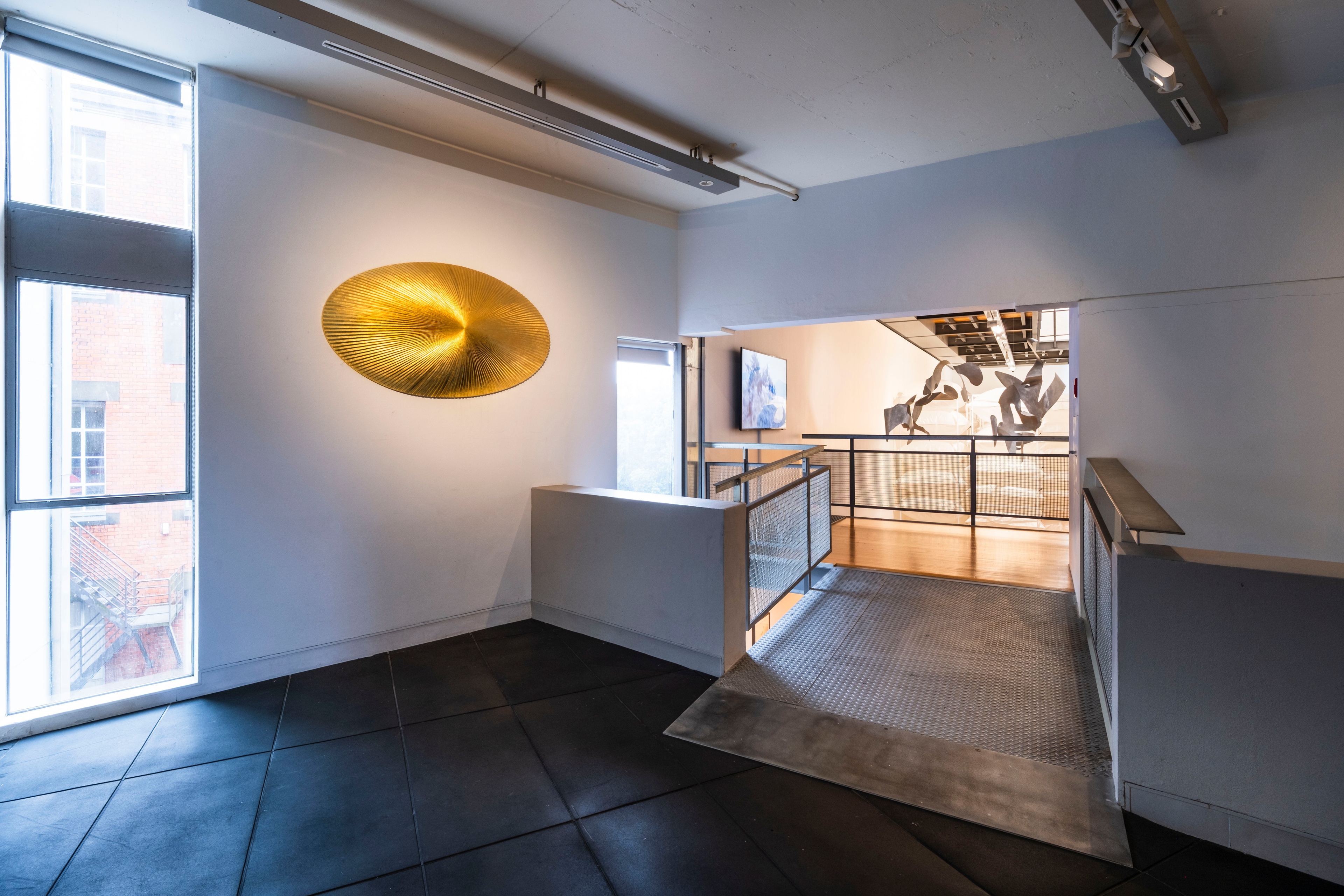
Brett Graham, Rāwhiti, 2014, carved beechwood, gold leaf, 1500 × 825 × 250 mm, Ngā Puhipuhi o Te Herenga Waka—Victoria University of Wellington Art Collection, purchased 2013. Installation view, Not a solitary feeling, Te Pātaka Toi Adam Art Gallery, Te Herenga Waka—Victoria University of Wellington, 2026. Photo: Ted Whitaker.
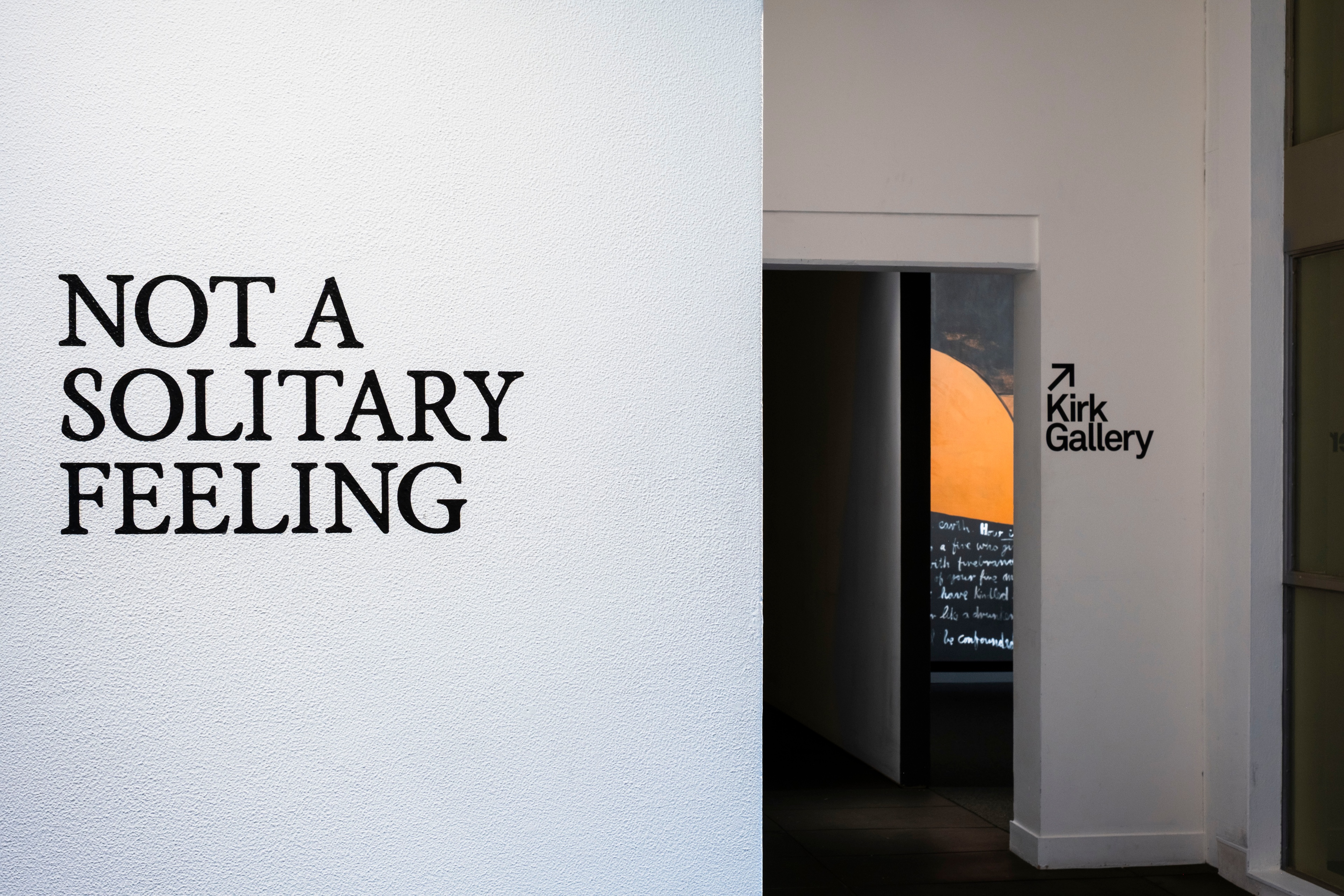
Installation view, Not a solitary feeling, Te Pātaka Toi Adam Art Gallery, Te Herenga Waka—Victoria University of Wellington, 2026. Photo: Ted Whitaker.
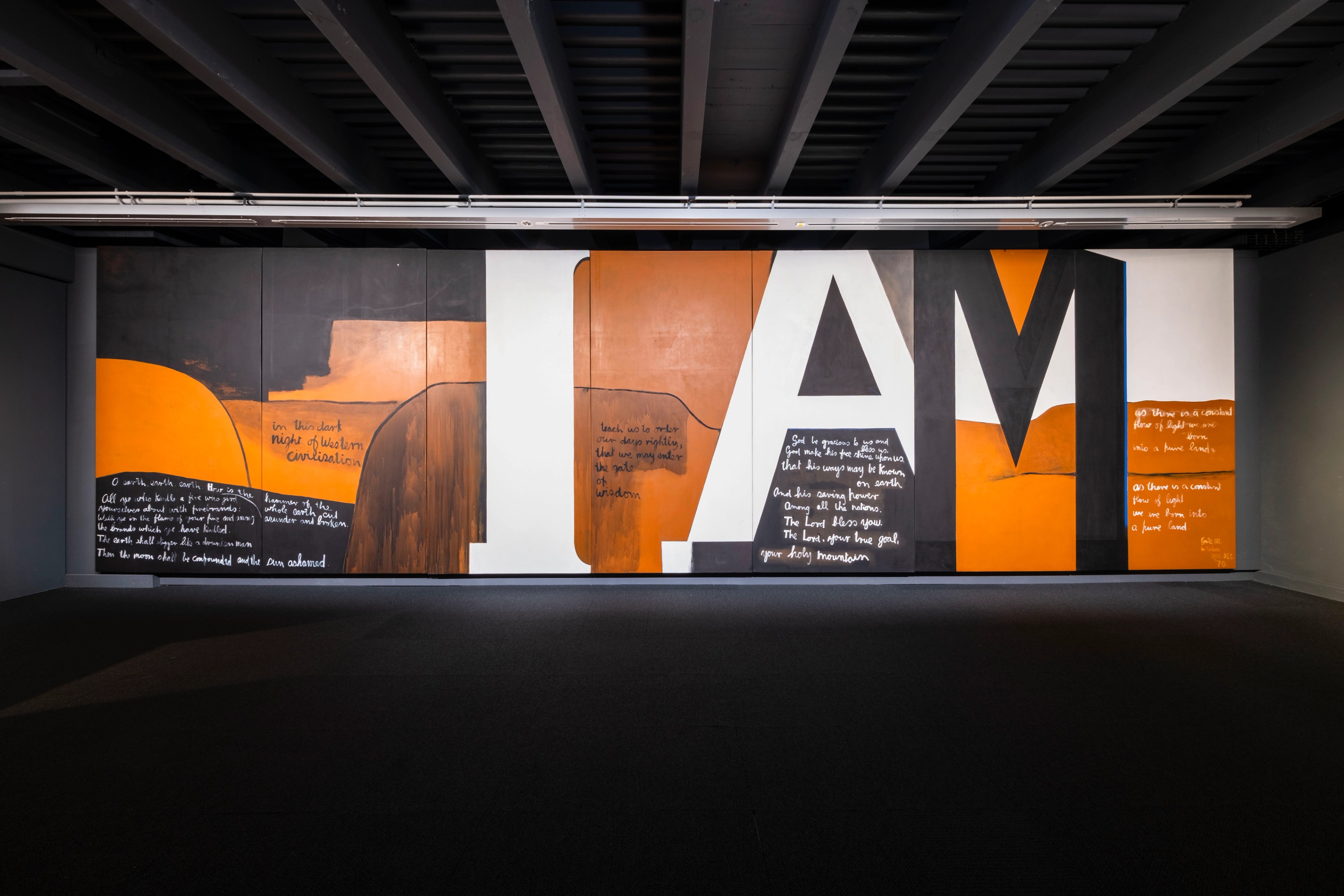
Colin McCahon, Gate III, 1970, acrylic on canvas, 3050 × 10675 mm, Ngā Puhipuhi o Te Herenga Waka—Victoria University of Wellington, purchased 1972 with assistance of the Queen Elizabeth II Arts Council. Installation view, Not a solitary feeling, Te Pātaka Toi Adam Art Gallery, Te Herenga Waka—Victoria University of Wellington, 2026. Photo: Ted Whitaker.
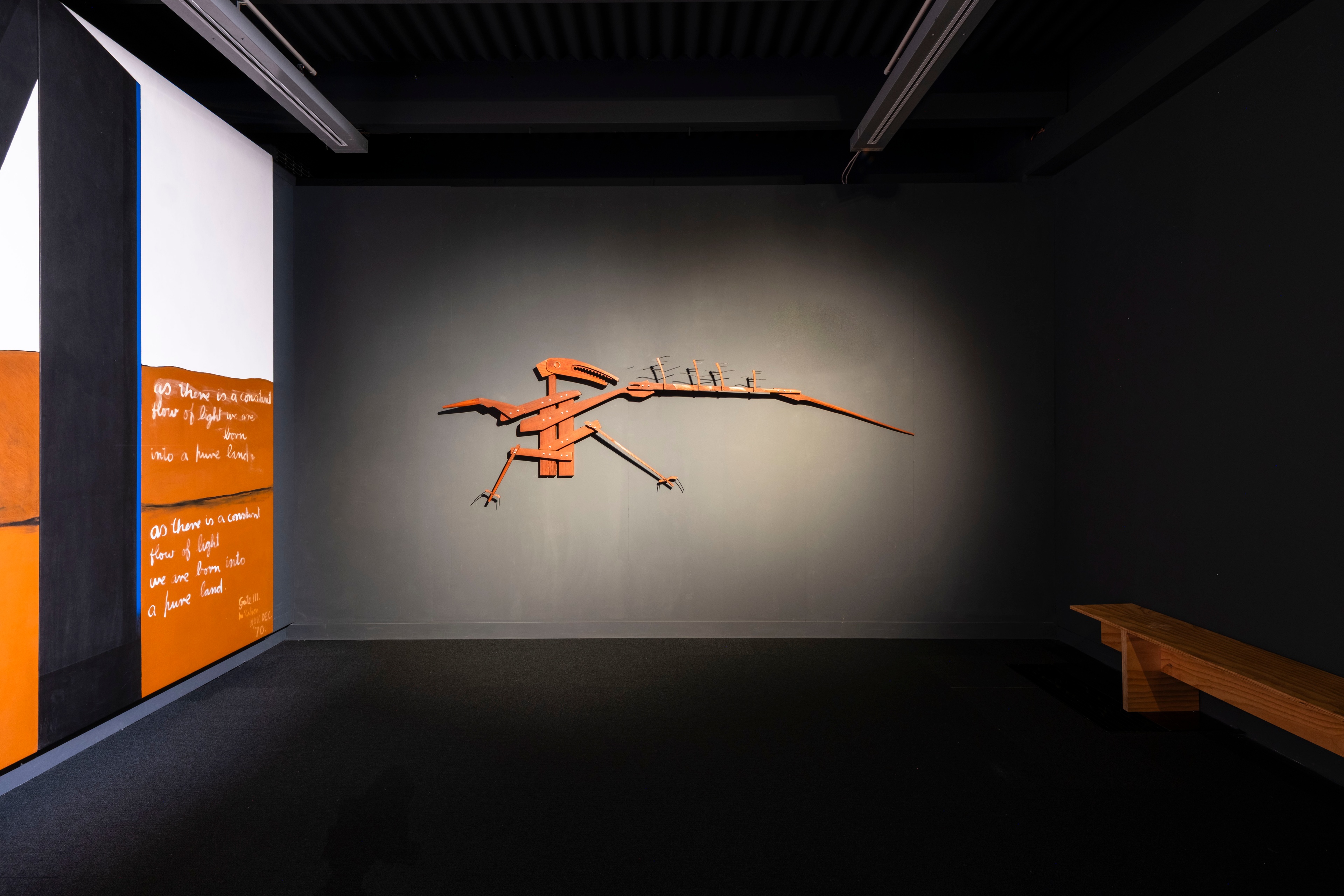
Ross Hemera, Tahito: A Bird for the Future, 1995, tōtara, No.8 wire, galvanised steel bolts, variable dimensions, 3000 mm width, Ngā Puhipuhi o Te Herenga Waka—Victoria University of Wellington Art Collection, formerly Wellington College of Education Art Collection, accessioned 2009. Installation view, Not a solitary feeling, Te Pātaka Toi Adam Art Gallery, Te Herenga Waka—Victoria University of Wellington, 2026. Photo: Ted Whitaker.
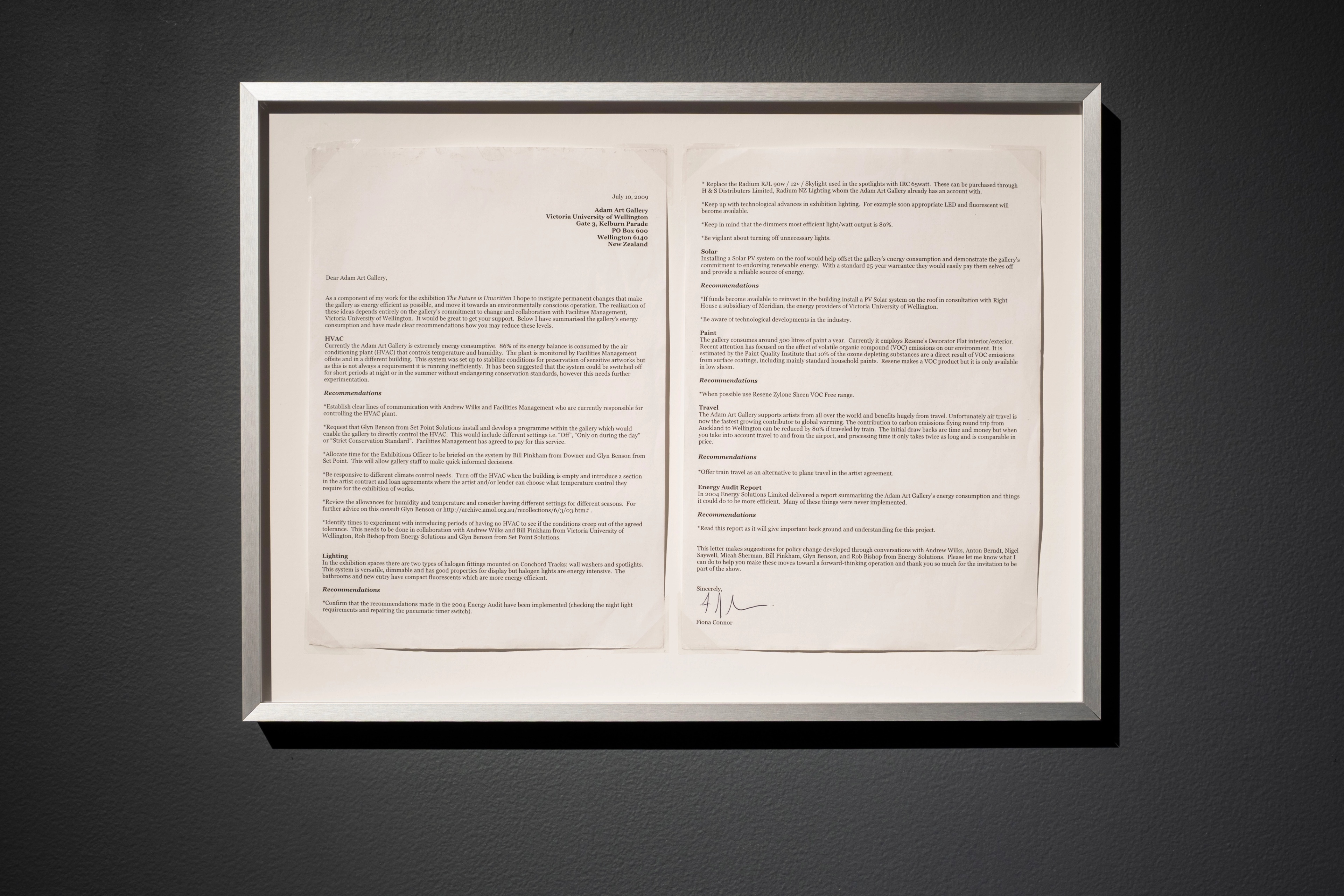
Fiona Connor, A Letter to the Unwritten Future, July 10, 2009–, letter, website (www.alettertotheunwrittenfuture.org), agreement, A4 text page, variable measurements, Ngā Puhipuhi o Te Herenga Waka—Victoria University of Wellington Art Collection, purchased 2018. Installation view, Not a solitary feeling, Te Pātaka Toi Adam Art Gallery, Te Herenga Waka—Victoria University of Wellington, 2026. Photo: Ted Whitaker.
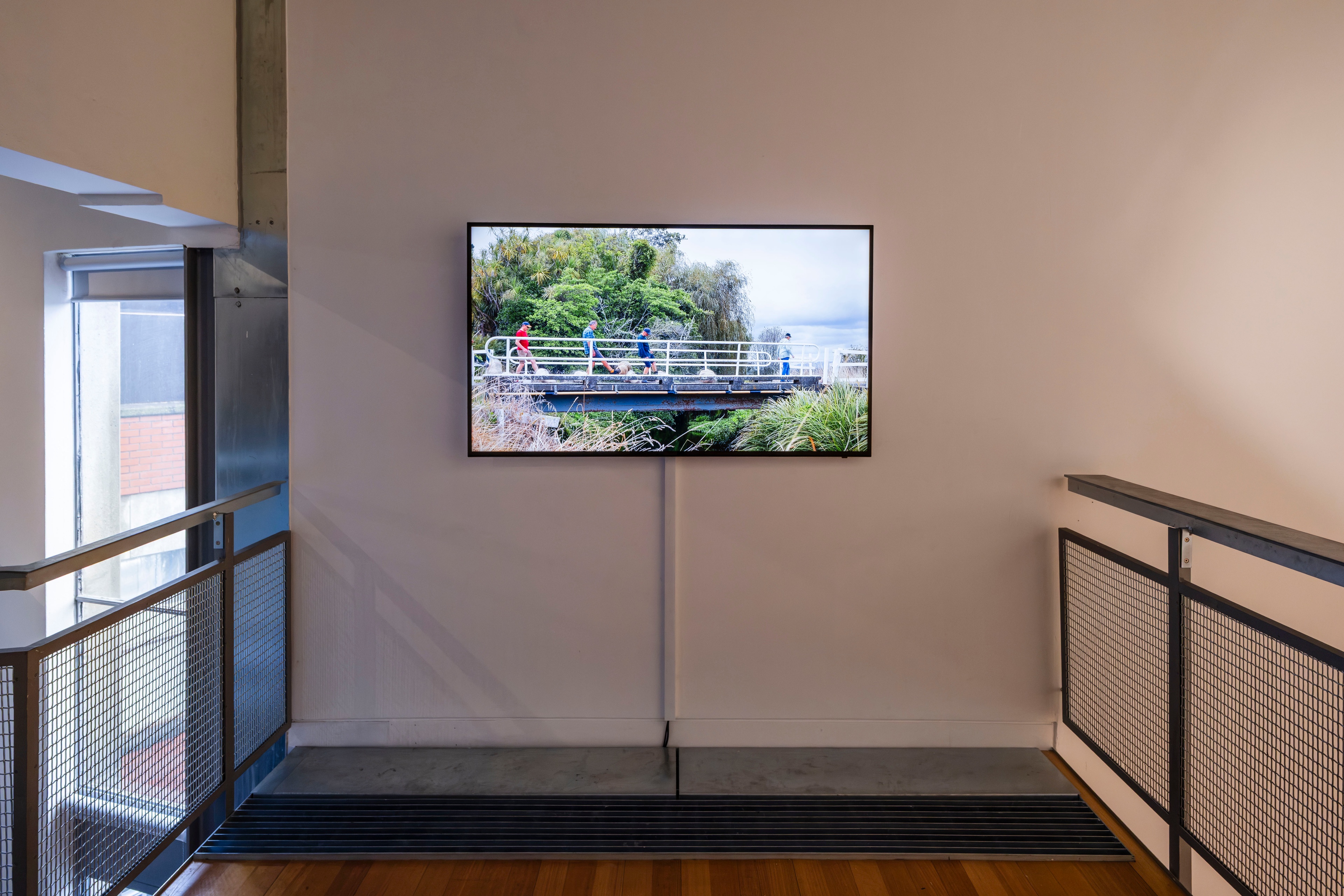
Mark Harvey, Whakahokia 2025, 13 minutes 55 seconds, single channel, digital video, colour, sound. Camera: Maija Stephens, Editing: Mark Harvey, with thanks to Ngāti Tukorehe, Huhana Smith and all marram ball kickers, courtesy of the artist. Installation view, Not a solitary feeling, Te Pātaka Toi Adam Art Gallery, Te Herenga Waka—Victoria University of Wellington, 2026. Photo: Ted Whitaker.
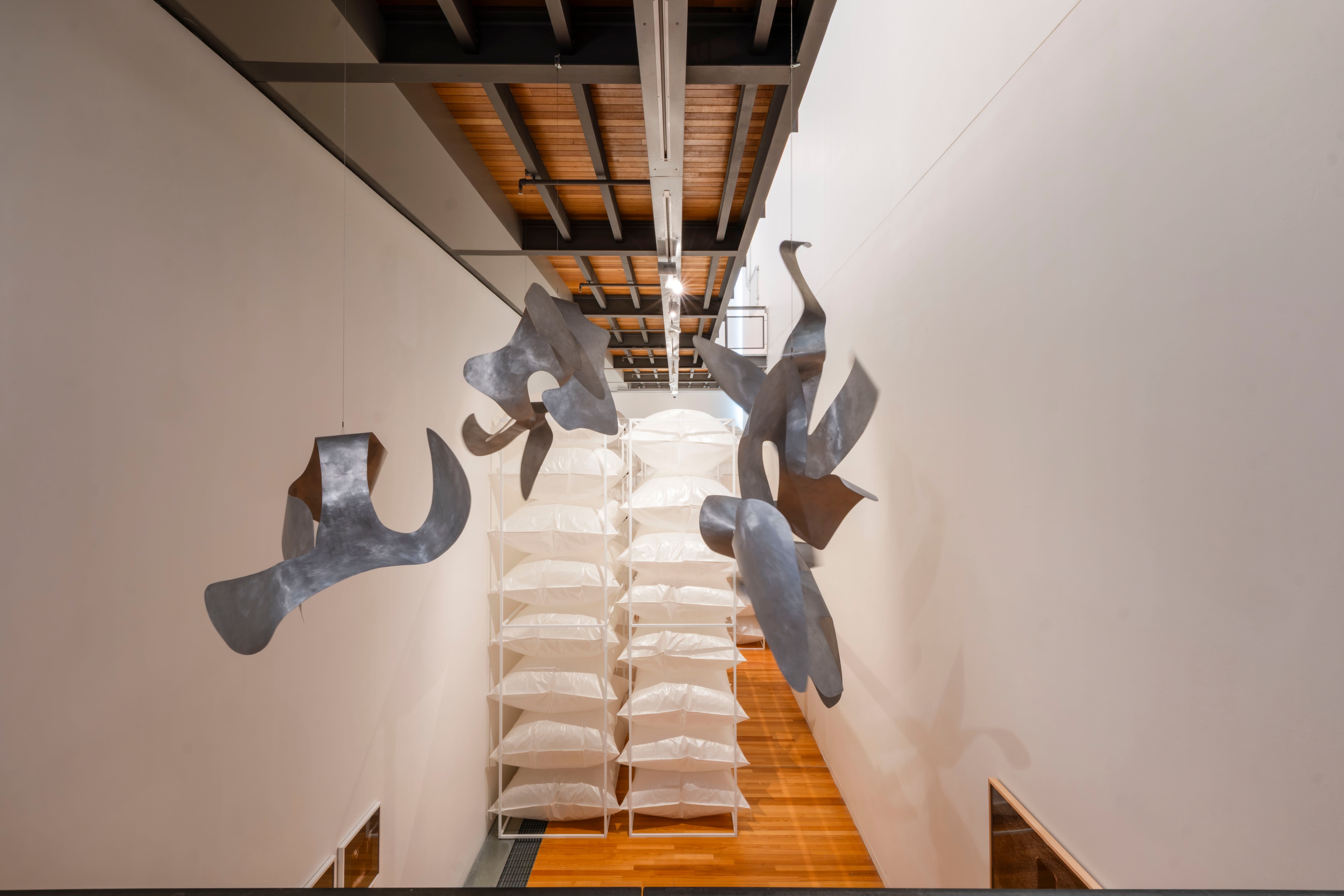
Tanya Ashken, Sea Creatures, 1971 (foreground) and Melissa Macleod, a borrowed chorus, 2026 (background). Installation view Not a solitary feeling, Te Pātaka Toi Adam Art Gallery, Te Herenga Waka—Victoria University of Wellington, 2026. Photo: Ted Whitaker.
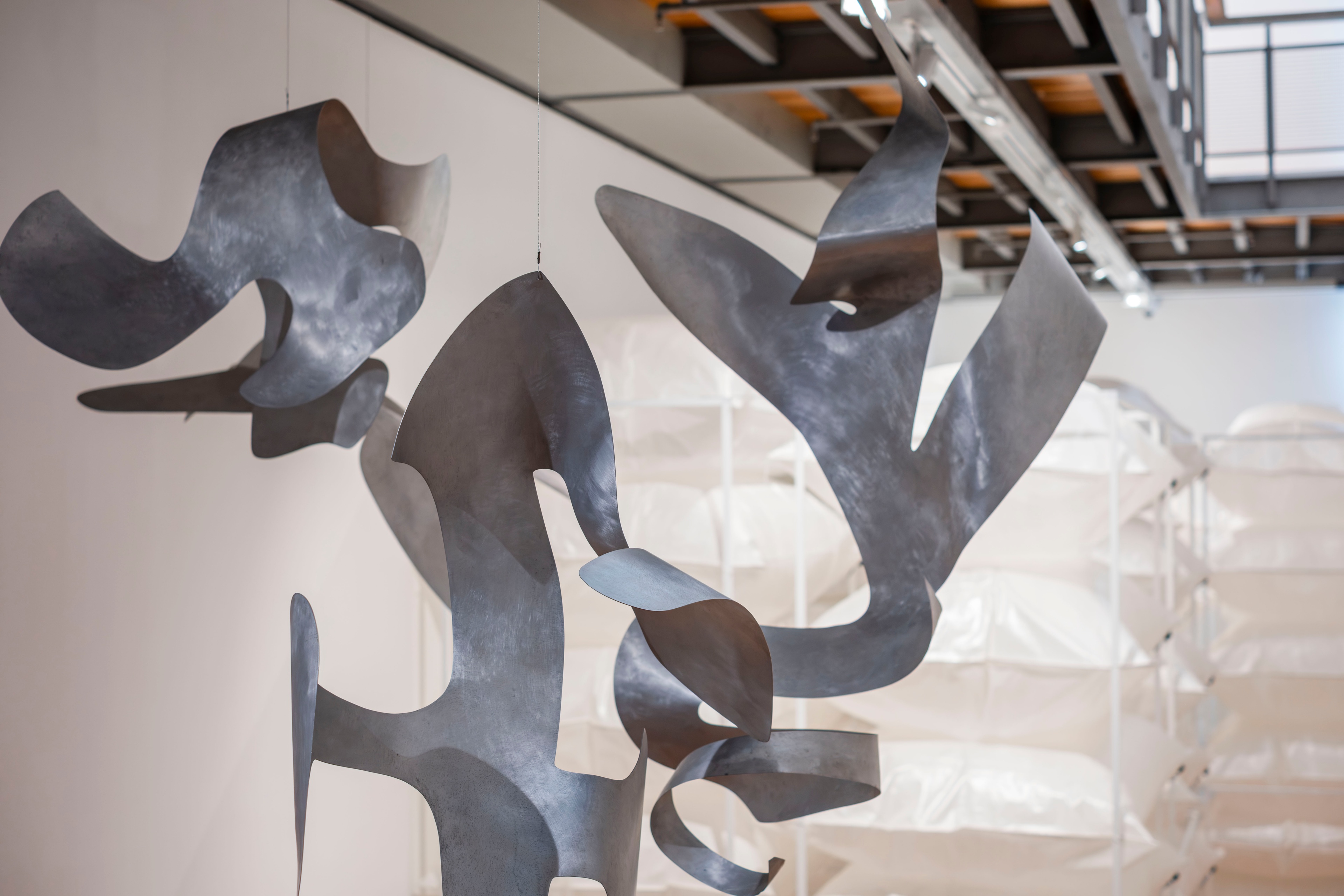
Tanya Ashken, Sea Creatures (detail), 1971, five-part mobile, shaped duralumin sheeting, variable dimensions, largest approximately 1400 × 840 × 600 mm, Ngā Puhipuhi o Te Herenga Waka—Victoria University of Wellington Art Collection, formerly Wellington College of Education Art Collection (gift of The Renaissance Singers of Wellington 1971), accessioned 2009. Installation view, Not a solitary feeling, Te Pātaka Toi Adam Art Gallery, Te Herenga Waka—Victoria University of Wellington, 2026. Photo: Ted Whitaker.
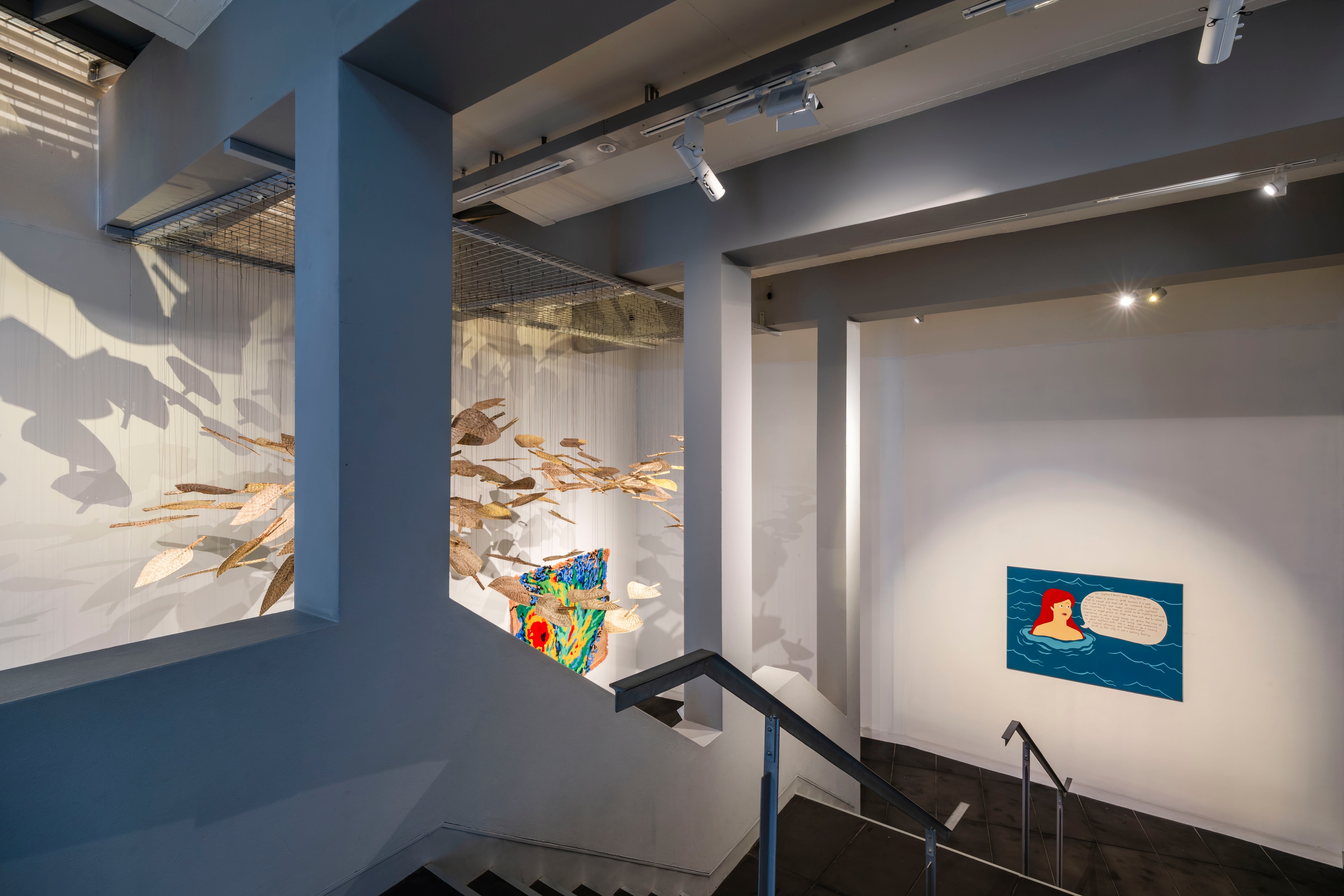
Installation view with works by Yuki Kihara (left) and Ayesha Green (right), Not a solitary feeling, Te Pātaka Toi Adam Art Gallery, Te Herenga Waka—Victoria University of Wellington, 2026. Photo: Ted Whitaker.
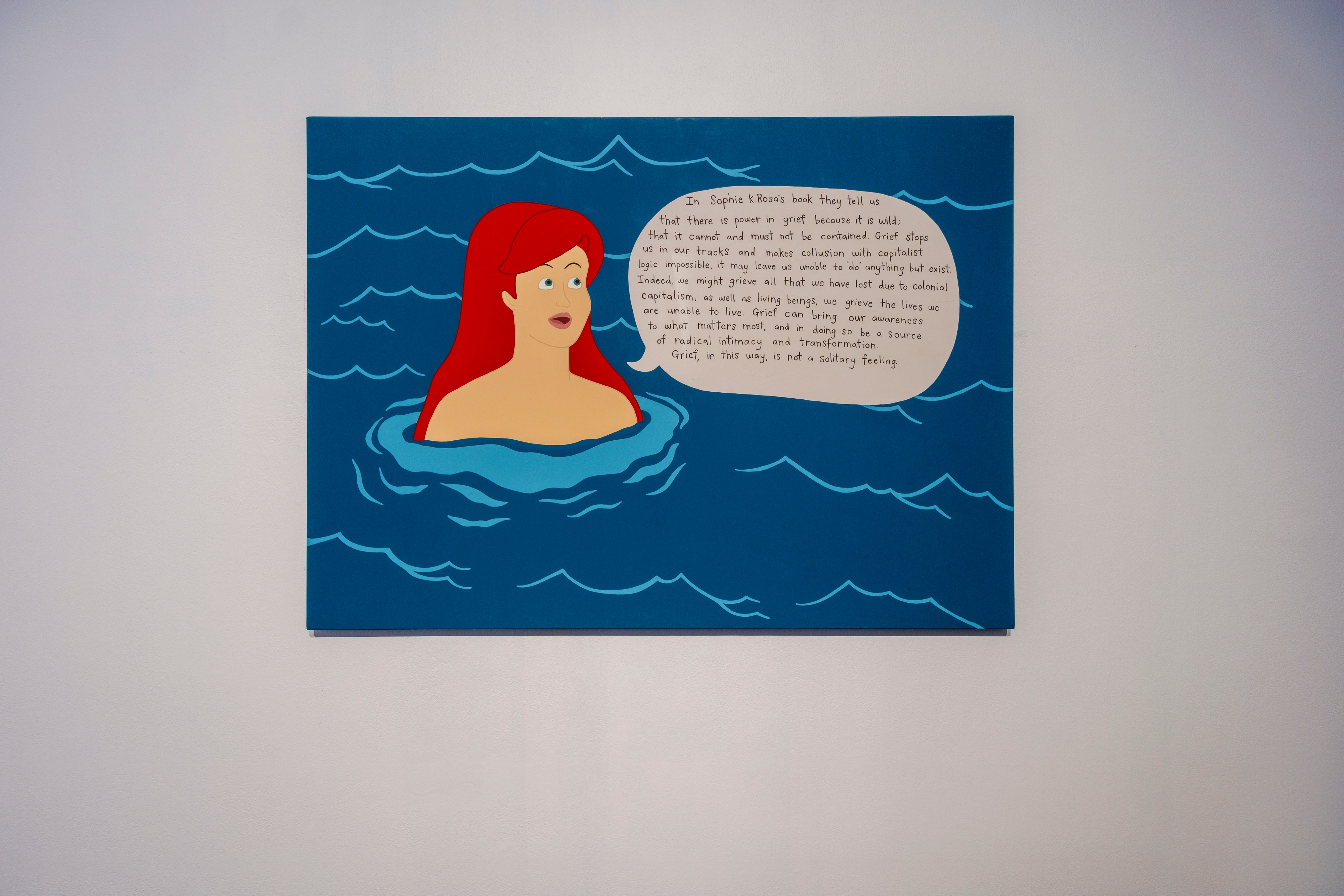
Ayesha Green, There is Power in Grief, 2024, acrylic on canvas, 1210 × 1680 mm, Ngā Puhipuhi o Te Herenga Waka—Victoria University of Wellington Art Collection, purchased 2024. Installation view, Not a solitary feeling, Te Pātaka Toi Adam Art Gallery, Te Herenga Waka—Victoria University of Wellington, 2026. Photo: Ted Whitaker.
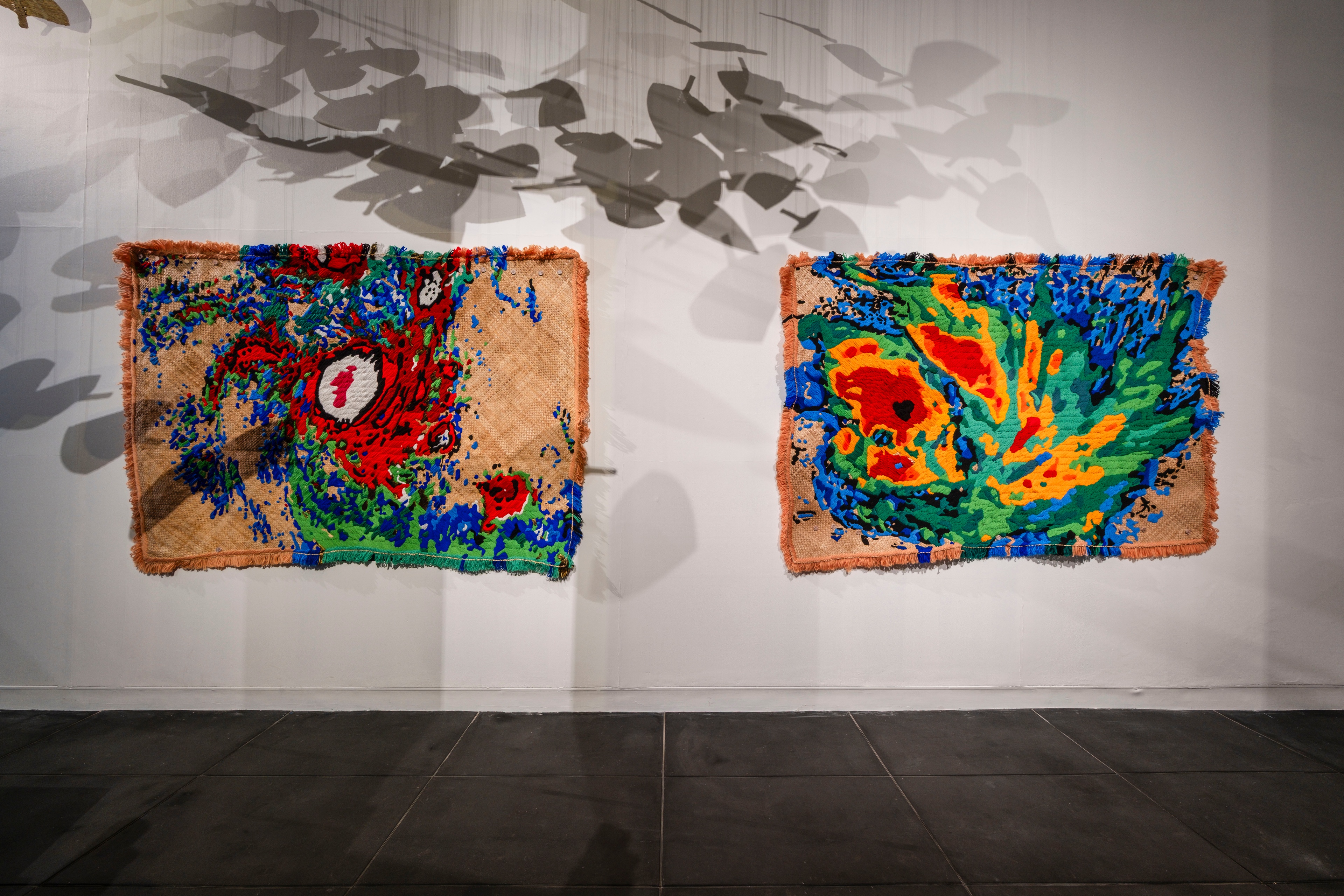
Yuki Kihara, Mal, 2025, and Zazu, 2025, pandanus mats, embroidered with the assistance of Moata’a Aualuma Community, Upolu Island, approx. 1600 × 2400 mm. Courtesy of the artist and Gow Langsford Gallery; and Winds of Change, 2026, installation of 100 pandanus fans handmade by Sāmoa Victim Support Group Nofotane, suspended, dimensions variable, courtesy of the artist.
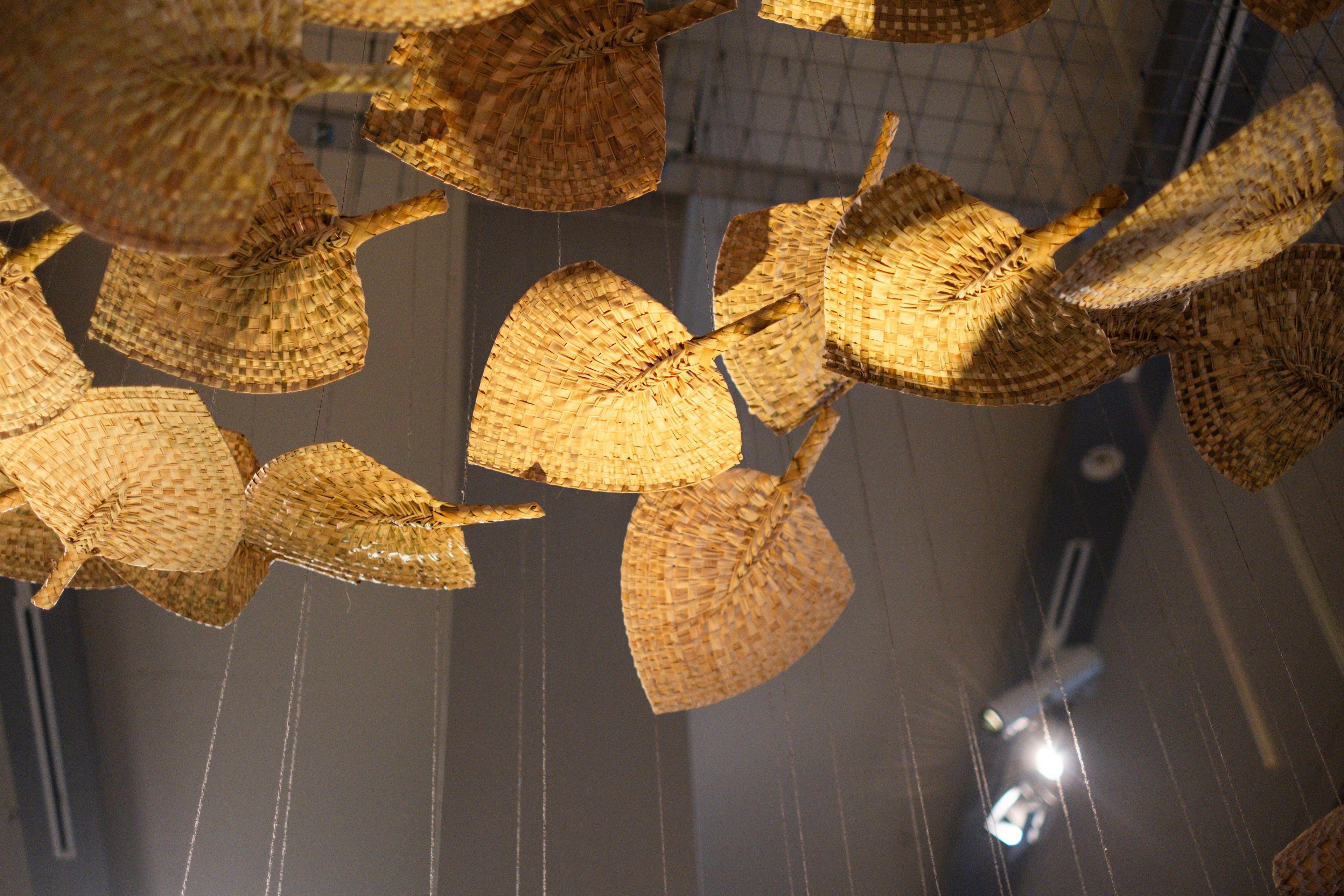
Yuki Kihara, Winds of Change (detail), 2026, installation of 100 pandanus fans handmade by Sāmoa Victim Support Group Nofotane, suspended, dimensions variable, courtesy of the artist. Installation view, Not a solitary feeling, Te Pātaka Toi Adam Art Gallery, Te Herenga Waka—Victoria University of Wellington, 2026. Photo: Ted Whitaker.
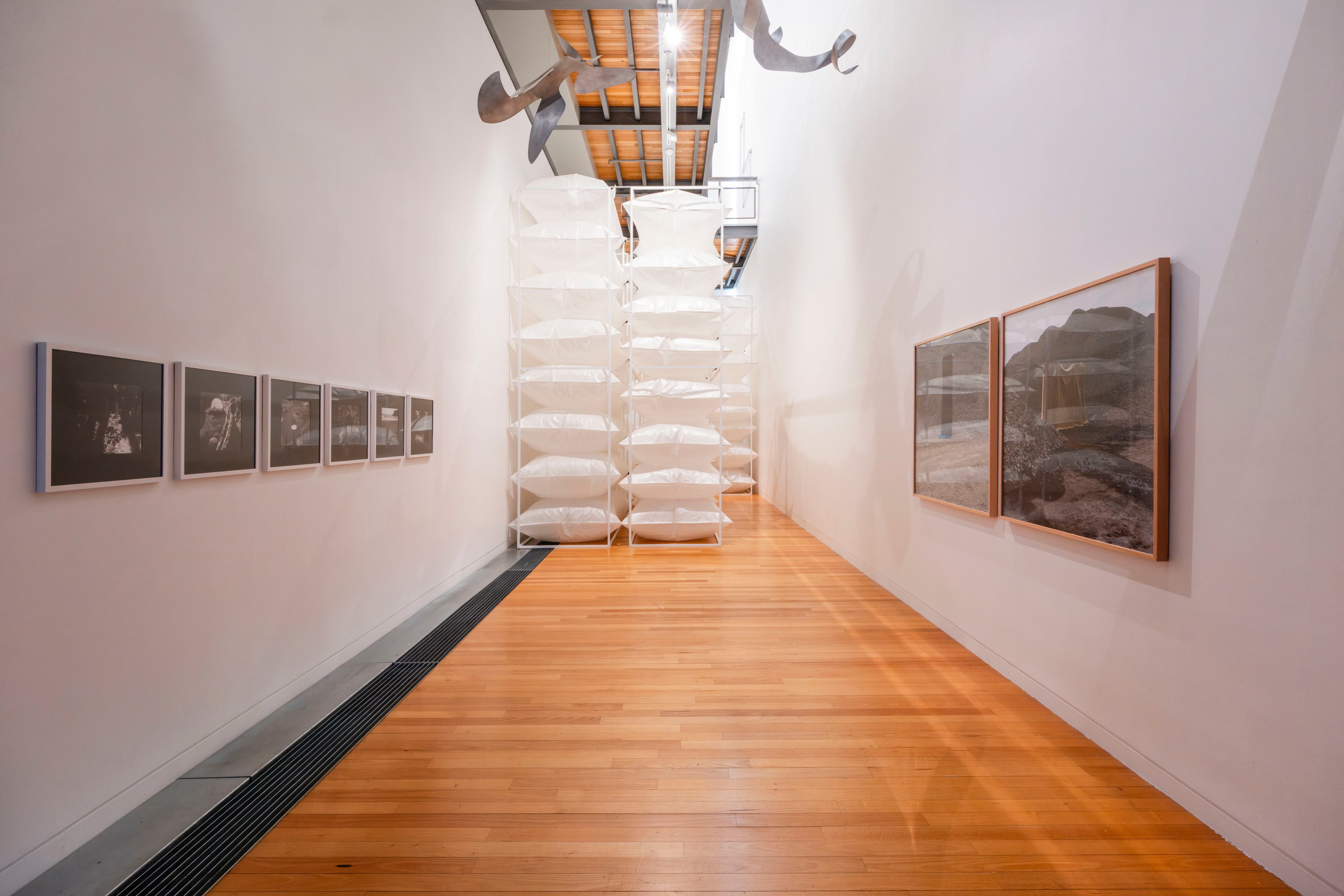
Installation view, Not a solitary feeling, Te Pātaka Toi Adam Art Gallery, Te Herenga Waka—Victoria University of Wellington, 2026. Photo: Ted Whitaker.
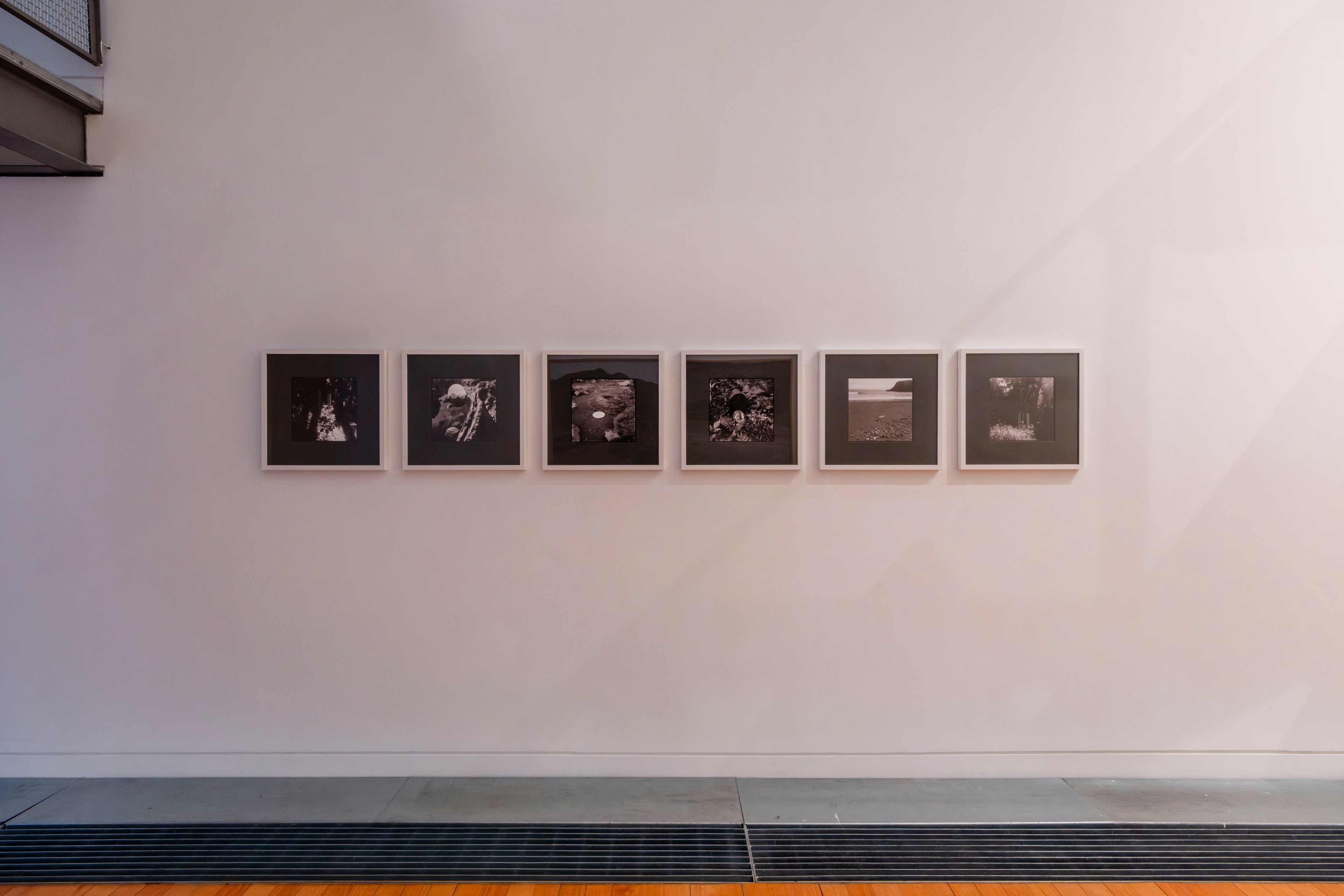
Christine Hellyar, Situations, 1969, archival black and white ink-jet prints on double weight art paper; toned to match vintage prints, 250 × 250 mm each, Collection Govett-Brewster Art Gallery, New Plymouth. Installation view, Not a solitary feeling, Te Pātaka Toi Adam Art Gallery, Te Herenga Waka—Victoria University of Wellington, 2026. Photo: Ted Whitaker.
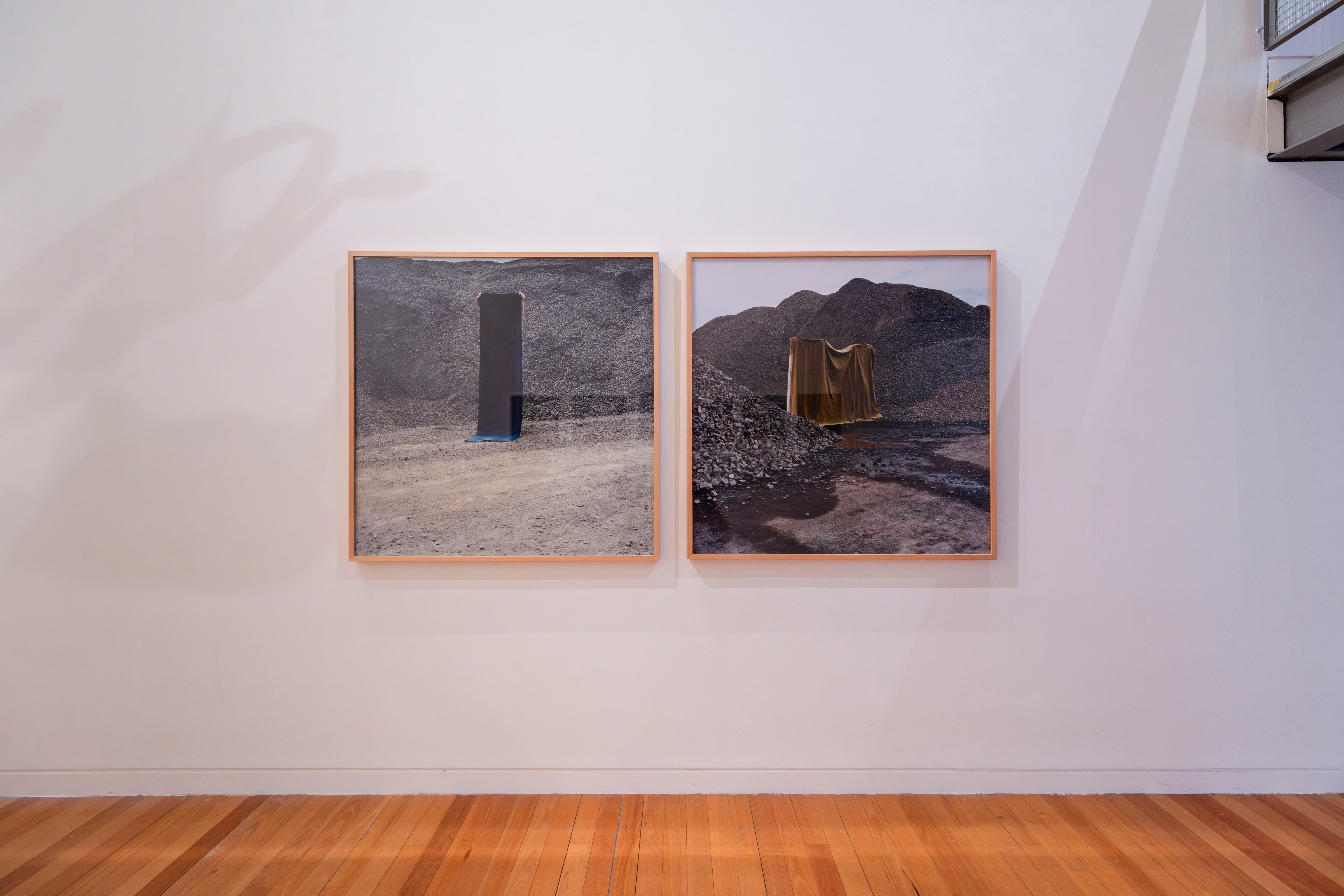
Layla Rudneva-Mackay, Grey Stones and Blue Velvet, 2007, C-type photograph, 1145 × 1145 mm and Yellow Curtain, 2008, C-type photograph,1145 × 1145 mm, both Chartwell Collection, Auckland Art Gallery Toi o Tāmaki, 2008. Installation view, Not a solitary feeling, Te Pātaka Toi Adam Art Gallery, Te Herenga Waka—Victoria University of Wellington, 2026. Photo: Ted Whitaker.
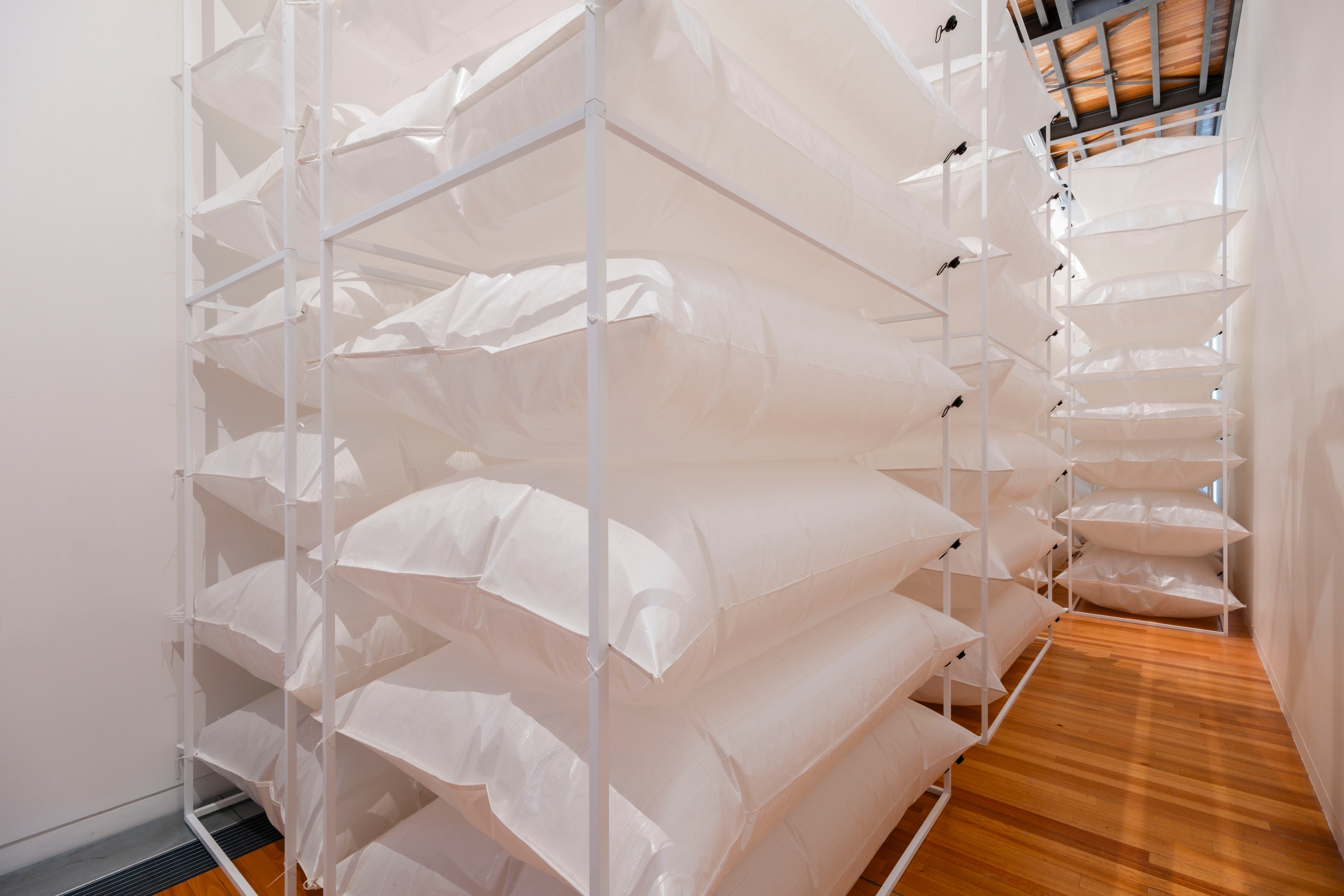
Melissa Macleod, a borrowed chorus (detail), 2026 (iteration #3), dawn air Pukehīnau/ Kelburn hill -41° 17' 18.96" S, 174° 46' 8.40" E, aluminium, cable ties. 1100 × 2200 × 4400 mm each structure, courtesy of the artist. Installation view, Not a solitary feeling, Te Pātaka Toi Adam Art Gallery, Te Herenga Waka—Victoria University of Wellington, 2026. Photo: Ted Whitaker.